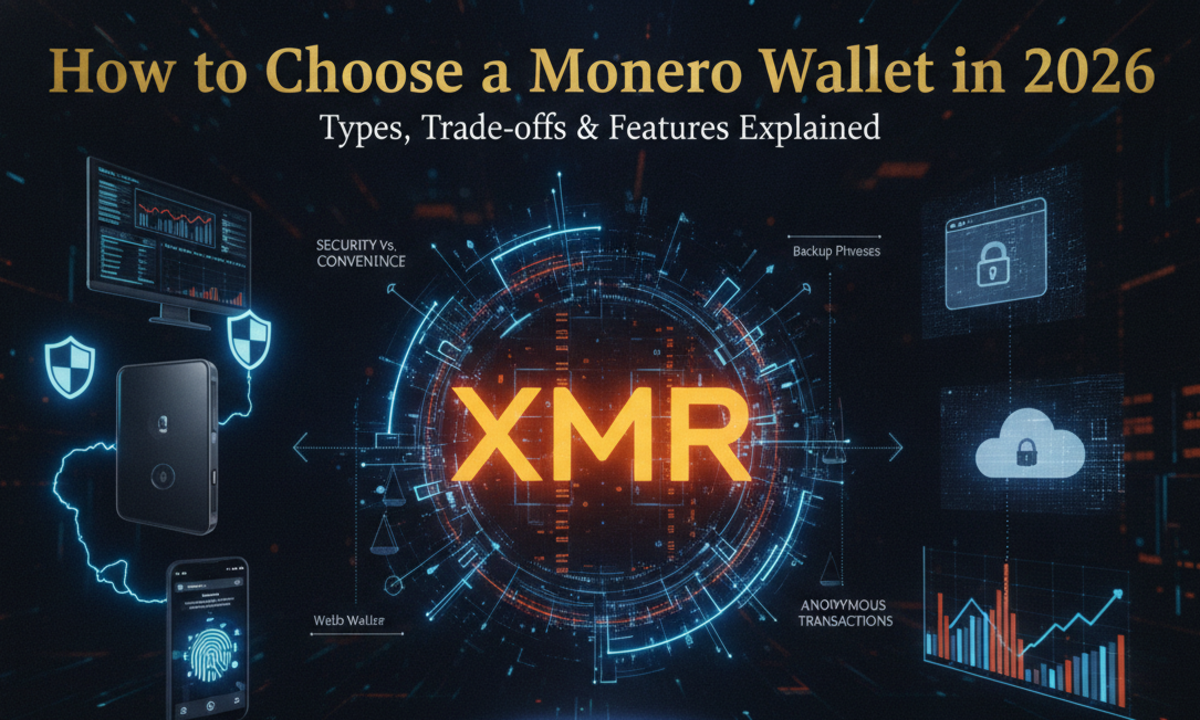
Picking a wallet is the first real decision anyone makes when they start using Monero, and it is more important than it looks. The wallet you choose shapes how private, how convenient, and how secure your experience will be. With several types available, each suited to different needs, it helps to understand the landscape before you commit. This guide breaks down the main kinds of Monero wallets, the trade-offs between them, the features worth checking, and how to match a wallet to the way you actually use XMR.
Why the wallet choice matters for Monero
Monero is built around privacy, but a wallet can either preserve that privacy or quietly undermine it. A good Monero wallet handles subaddresses so you can receive payments without reusing the same address, connects to the network in a way that does not leak your activity, and keeps your keys under your control. Because Monero uses a privacy-preserving design that most blockchain explorers cannot see into, your wallet is also your main window into your own funds. Choosing well means smoother daily use and fewer surprises.
The main types of Monero wallets
There are four broad categories, and each makes a different bargain between control, convenience, and security.
Hardware wallets store your keys on a dedicated physical device that never exposes them to the internet. This is the gold standard for security and is ideal for long-term holders sitting on significant amounts. The downsides are cost, the need to keep the device safe, and slightly more friction for everyday transactions.
Desktop and full-node wallets give you maximum control and the strongest privacy, because you can run your own node and verify everything yourself. The trade-off is that running a full node means downloading and syncing the blockchain, which takes time and disk space, and ties you to a single computer.
Mobile wallets put Monero in your pocket and are great for spending on the go or scanning QR codes in person. They are convenient, though a phone is easier to lose or compromise than a hardware device, so they suit smaller, everyday balances.
Web wallets run entirely in your browser with nothing to install. They are the fastest way to get started and the most accessible across devices, which makes them popular with newcomers and anyone who values convenience. As with any always-connected option, they are best for working balances rather than your entire savings.
Custodial versus non-custodial
Beyond the form factor, wallets differ in who controls the keys. Non-custodial wallets put you in sole control: you hold the keys and the recovery seed, and no one else can touch your funds, but you are also fully responsible for backups. Custodial or hosted services manage the wallet infrastructure for you and let you log in with credentials, trading some control for convenience and ease of recovery. Neither is automatically better; what matters is that you know which model you are using and choose it deliberately based on how much value you are storing and how much responsibility you want.
Key features to look for
Whatever type you lean toward, a few features separate a solid Monero wallet from a frustrating one. Look for no-KYC access, since one of Monero’s main appeals is using it without handing over personal documents. Check that the wallet supports subaddresses for clean, private receiving. Favour wallets from reputable, transparent teams, ideally with open or well-reviewed code and a track record. Make sure the interface clearly shows balances, pending transactions, and fees so you are never guessing. And confirm that recovery is straightforward through a standard seed phrase, so you can restore access if a device fails.
Matching the wallet to how you use Monero
The right choice depends on your situation. If you are a long-term holder, a hardware wallet or a desktop wallet with your own node gives you the strongest security and privacy. If you are a daily user who sends and receives often, a mobile or web wallet keeps things quick and painless. If you are a complete beginner, a browser-based wallet is usually the gentlest on-ramp, because it removes installation and syncing entirely. Many people end up using more than one: a cold option for savings and a convenient one for everyday activity.
Where web wallets fit
For users who simply want to start using Monero without a technical setup, a browser-based Monero wallet is the easiest entry point. You open a website, create a wallet in under a minute, and immediately have an address to receive XMR and a send page for moving it, all without downloads or blockchain syncing. This convenience is exactly why web wallets have grown in popularity, especially among people coming to privacy coins for the first time. If you are weighing specific options, a side-by-side comparison of WebMonero and MyMonero is a useful way to see how two browser-first wallets differ in features, fees, and design before you decide.
Security basics that apply to every wallet
No matter which type you choose, the fundamentals are the same. Write your recovery seed phrase on paper and store it offline in more than one safe place; never type it into a random website. Use a long, unique password and enable every security feature your wallet offers. Always verify the exact website or app you are using, because fake wallets and phishing pages are a constant threat in crypto. And keep large holdings separate from the smaller balance you use day to day, so a single mistake can never cost you everything.
The bottom line
There is no single best Monero wallet, only the best wallet for your needs. Hardware and full-node wallets win on security and privacy, mobile and web wallets win on convenience, and most users benefit from combining them. Decide how much you are storing, how often you transact, and how much responsibility you want over your keys, then pick accordingly. Whatever you choose, protect your seed phrase, stay alert to phishing, and you can enjoy everything Monero offers with confidence.